Friday, January 13, 2023

Win a pass to RootsTech in Salt Lake City


From March 2-4 the first in-person RootsTech Conference since 2020 will take place in Salt Lake City. There will also be a free online version of the conference.

The 3-day in-person conference will have all the features we’ve come to expect: keynote speakers, the Expo Hall (with hands-on demos, a chance to talk to vendors, and to see new innovations) and about 210 in-person classes.

The online conference will also have the keynote speakers, and online Expo Hall, as well as 200+ on-demand classes and live webinars. There will also be a limited number of the sessions from the Salt Palace which will be live streamed.

The theme this year is “Uniting”. We’ll be uniting with innovators and friends, uniting with traditions, and uniting with our families, past and present.

Here is your chance to win a pass to the in-person event, valued at $US98. The pass will include access to all on-site classes (though they will be in 16 concurrent streams), accessed to Keynotes and General Sessions, and access to the Expo Hall. Further information can be found at https://rootstech.org.

If the winner has already registered and paid, their registration will be refunded in full.

Please do not enter my competition if you can’t attend in person.

To enter, please send the answer to jennyjresearch@gmail.com. The competition will close at midnight GMT on 26 January. The winner will be chosen at random from the correct answers.

Who am I?

I was born in Atlanta, Georgia in 1929

I became a Baptist minister

I gave a famous speech on the steps of the Lincoln Memorial

I won the Nobel Peace Prize in 1964

I was assassinated in 1968


Disclaimer: As a RootsTech Influencer, I receive complimentary admission to the event, invitations to some extra events and dinners and a free registration to give to one of my readers. I bear the cost of my return airfares from Australia and pay for my accommodation and meals.

Wednesday, September 14, 2022

What's happening with RootsTech in 2023

RootsTech 2023 will take place 2-4 March and will be a hybrid event – both in-person and virtual. Both forms of the conference will take place at the same time.


The theme for the 2023 conference is Uniting. It is bringing people together, bringing people to the vendors and innovators. Bringing communities together. Bringing the technology to the people. Staying connected to the people who went before.

As with the previous two virtual conferences, the virtual conference this year will be free, and it will be an opportunity for people all over the world to attend RootsTech, even if they can’t travel to Salt Lake City. There will be over 200 virtual classes, so there will definitely be something there to interest you.

As for the live conference in SLC, registration will cost just US$98. This is a lot less than previous in-person conferences, and this is not because it will be a lesser experience, but to enable more people to be able to afford to attend. This cost will give you access to all the classes, all the main stage events and so on. You will, of course, be able to access the Expo Hall too, but so will people who have not paid for registration. In other words, the Expo Hall will be free.

I imagine that some of you are wondering why you should attend the conference in person, since the virtual conference is free. Well, firstly, not all of the in-person classes will be live streamed. Some will, but not all. But the main reason is the buzz and the energy of being there in the Salt Palace. It is a chance to be around like-minded people who don’t roll their eyes when you talk about your latest discovery. It’s a chance to talk in person to vendors, not just via chat. And possibly to talk to the speakers to ask them more about their topic. The energy and excitement of being there is fantastic to experience. There is also the fact that for the days before and after the conference you can choose to go to the Family History Library, which is just a block away from the Salt Palace. This fantastic library still has so much for the genealogist to see and research, as well as expert staff who can advise you on your area of interest.

Because there has been disappointment in previous years when a class that people wanted to attend in person was full, this time the classrooms will be bigger. The smallest rooms will hold 500-600 people, because they don’t want people to miss out. There will also be viewing spaces for small groups to watch some of the online sessions and discuss them afterwards, or maybe to even have the speaker there with them to discuss the subject,

Even if you only plan on attending the virtual conference, it is recommended (but not compulsory) that you register. This will help the RootsTech organisers to keep you informed of what is coming up, it will allow you to create a playlist of sessions that you want to watch and to chat with speakers and other attendees. Registration will open soon.

The Expo Hall in 2018

If you are planning on only attending the virtual event, why not organise a “watch party” with your friends or your local family history group?

And you will be pleased to know that Relatives at RootsTech will be back. It will be available for the virtual conference, but for those who are there in person, it will highlight the fact that your relative is also there in person.

Follow RootsTech on social media to keep up with all the new announcements.

But the final word goes to Jen Allen, Director of Events for FamilySearch: “We want it to be joyful for everybody.”

Disclaimer: I am a RootsTech Influencer

Thursday, March 31, 2022

RootsTech in Review

RootsTech was an online event again this year, which means that even even though the event has closed, we still have plenty of time (all year) to watch the talks. Which is just as well because there are so many great talks to watch. But more of them in a minute.

First, I want to make another comment on the theme of the conference: #ChooseConnection. I have already written about the way this resonated for me with regards to the current war in Ukraine, but I have also been making new connections of my own. Three weeks ago we got a little puppy, Cassie. Because we have been taking her to the grass at the front of our home to do her business, and because she’s so cute and adorable, people have been coming up to look at her and sometimes to pat her. This means that I have got to know people who live two doors down, and others from all over our estate. These are people who’ve been here for years and years, but only now have I got to meet them. These are wonderful new connections I have made! And it has enhanced my sense of community in the enclave in which I live.

Anyway, back to the talks in this year's RootsTech Connect. There are so many to choose from, and (unsurprisingly) I have not yet had time to watch all the talks that I am interested in. But here are some of the ones I have particularly enjoyed.

First, just some of the keynote speakers:

Apollonia Poilâne – this quietly spoken, gentle young woman was faced with tragedy aged 18 and now controls her family’s business https://www.familysearch.org/rootstech/session/steve-rockwood-and-apollonia-poilane-main-stage-general-session-1

Matthew Modine – how incredible to find that you had ancestors who lived within a stone’s throw of the place where you chose to live yourself! https://www.familysearch.org/rootstech/special-session/matthew-modine-acting-and-the-power-of-connection

Molly Yeh – a wonderful story of the connections forged through food https://www.familysearch.org/rootstech/registered-session/molly-yeh-shaping-her-legacy-through-food


And, of course, some of the many other talks:

Sophie Kay - Ancestral Hide-and-Seek in the Roaring Twenties: The 1921 Census of England & Wales. An excellent talk about the newly released 1921 census https://www.familysearch.org/rootstech/series/ancestral-hide-and-seek-in-the-roaring-twenties-the-1921-census-of-england-wales

Nick Barrett - When Harry met Dotty – using DNA to break down brick walls. An interesting case study (I always enjoy those). https://www.familysearch.org/rootstech/session/when-harry-met-dotty-using-dna-to-break-down-brick-walls

Daniel Horowitz - Genealogy of the Food Brands. A fun way to illustrate the records available on MyHeritage by examining the families who are the names behind some famous food brands. https://www.familysearch.org/rootstech/session/genealogy-of-the-food-brands

Ugo Perego - What does it mean to have Neanderthal ancestry. A very interesting talk about the evolution of homo sapiens and Neanderthals, and what your DNA can reveal about any neanderthal ancestors you may have. Particularly interesting for me as apparently I have more neanderthal DNA than 85% of my contacts (no comments about my height, please!) https://www.familysearch.org/rootstech/session/what-does-it-mean-to-have-neanderthal-ancestry

Janet Few - How to Handle Sensitive Topics in Family History (aka Family History Warts and All: How inclusive is your family story). Not so much how to handle them, but an examination of the type of things that might crop up (criminals, mental health problems, illegitimacy, slavery etc) https://www.familysearch.org/rootstech/session/how-to-handle-sensitive-topics-in-family-history

Maxine E Meurs - Researching the identity of my Chinese Great-Great-Grandfather. Growing up in Australia I am often guilty of only thinking about the European history of my country in the 19th Century, so this was an interesting and eye-opening talk about the family of a Chinese man who came to Australia during the gold rush. https://www.familysearch.org/rootstech/session/researching-the-identity-of-my-chinese-great-great-grandfather

Why not go to RootsTech Connect 2022 and watch some of the talks and let me know which ones you liked!

Saturday, March 5, 2022

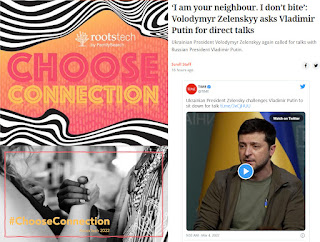
If Only Putin would #ChooseConnection not Division

I am breaking my own rule and making a post that contains my political opinions, but it is so relevant to the message of RootsTech Connect 2022.

NOTE: These opinions are my own and do not necessarily reflect the views of FamilySearch International and RootsTech.

This year’s theme is #ChooseConnection. I was watching the news last night after the first day of this year’s RootsTech conference, and the contrast between that message and the current Ukrainian situation struck me so strongly. Steve Rockwood, CEO of FamilySearch International, stated

‘When we say “connection” we mean connection to people: our family and friends of today, our ancestors of the past, and connection to those who are strangers today but as we discover our common ancestors, our common homelands, they become close friends and even cousins of tomorrow. We mean connection to the world, including our homelands; connection to our culture, our heritage … We mean connection to principles. Principles of trust, love, faith, honesty and compassion. And most of all connection to each other, especially at this time when so much division is being thrust upon us.

This theme and the ideas and scripts were developed long before the current situation commenced, yet they couldn’t be more relevant right now. What is happening is horrifying and frightening.

Most of the world is united in its support of Ukraine and condemnation of Russia. None of us want this to continue. Volodymyr Zelenskyy begged Putin to talk to him face to face ‘I am your neighbour. I don’t bite.’ But still it continues.

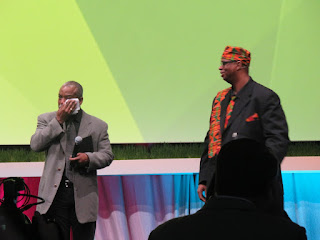
Back in 2018 Rockwood talked about the theme of that RootsTech conference: “Connect. Belong”. He said that FamilySearch wants people to connect, because when we connect we treat each other differently. Connections can generate emotions, as with the discoveries LeVar Burton made in 2017 which brought him to tears.

If only Putin would agree to talk instead of attack, negotiate instead of sending missiles, #chooseconnection instead of division we could return to peace instead of standing on the brink of a disaster.

This is all very serious, I know, and it brings down the mood, but as with so many of the RootsTech conferences, the messages and themes resonate with me.

Back in 2017 when LeVar Burton spoke, he said that until he saw people like Diahann Carroll in the sitcom Julia, and Clarence Williams III in The Mod Squad, he had never before seen people like him starring on TV. That comment has come back to me many times since then. It was a perspective that I had never encountered before, though I should have realized it by myself. By making the connection I did when listening to his keynote I understood the world a little bit better from another point of view.

Whatever can bring that understanding can only help the world. Finding out about your ancestors and ancestral homelands – especially if that journey uncovers some surprises – can only help us connect with others and contribute to making the world a better place.

LeVar Burton after hearing about his family

NOTE: These opinions are my own and do not necessarily reflect the views of FamilySearch International and RootsTech.

Wednesday, January 26, 2022

RootsTech Connect 2022 is coming soon

 It is now less than six weeks until RootsTech Connect 2022 starts (yikes! I’d better get on and watch more of the 2021 talks, which are still available online).

Last year’s conference was the first fully online conference, and it was excellent, attracting 1.5 million viewers worldwide. But with more experience of this new online world, this year’s conference promises to be even better!

Three of the keynote speakers have already been announced, and new speakers from around the world will be announced each week. 

Some of the memorable keynotes from the past were LeVar Burton, Donny Osmond, Saroo Brierley and Jake Shimabukuro, Cece Moore and Dan Snow. These links will take you to my comments about their talks.

So what does this year have in store?

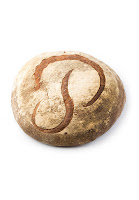
Apollonia Poilâne is a Franco-American baker who, at the age of 18, took over her family’s business, founded in 1932 and based in Paris. Learn about her story and how her family revolutionized the way we think about bread. Read more here and here.

The famous pain Poilâne

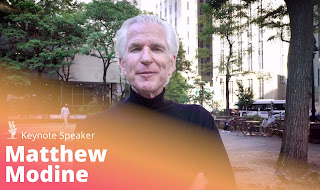
Matthew Modine is an American Actor famous for Stranger Things, The Dark Knight Rises and Full Metal Jacket. His story will talk about connects and the ripple effect they can have. Read more here and here


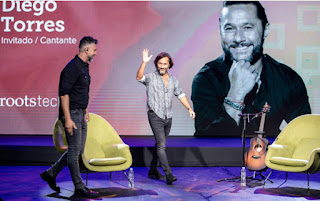
Argentine singer, songwriter, producer, musician, and actor Diego Torres talks about how music is a universal language that connects people through the generations. Read more here and here.  


Register for free to hear these, and many other talks, at rootstech.org

Disclaimer: I am a RootsTech Influencer, Presenter and Exhibitor.


Tuesday, June 29, 2021

The Registry of Deeds in Ireland

You may not have heard about the Registry of Deeds in Dublin, but if you are interested in Irish research then you should know about it. 

The Registry of Deeds was established in 1708 to allow people to record deeds and other documents relating to land transfers. A major driver in its establishment was to enforce the laws that prohibited Catholics from owning land or entering into leases longer than 31 years. It was never compulsory to register a deed, so not all transactions are recorded, but by 1833 when the numbering system changed, over 600,000 documents had been recorded. 

Tombstone Books in the Registry of Deeds.
Photo Credit: Nick Reddan (with permission) 
Memorials or synopsises of deeds and other documents were recorded in large books known as memorial books or tombstone books. They are not true copies of the original document, but contain all relevant information relating to the land transaction or transfer. Amongst the documents recorded are land sales, leases, mortgages, marriage settlements and even wills. Anything that might relate to land could be included. The wills are a particularly valuable inclusion because all the original wills were destroyed in the fire in the Four Courts in Dublin in 1922 and this may be the only source of the information included in a will. 

Among the things you might discover that will help you build your family tree include names and relationships, ages and death dates, wives' maiden names, and residences. 

Example of a page from one of the
Tombstone Books

Two sets of indexes were created to allow access to the Deeds. The first is the Grantor Index. The name of the primary grantor, and occasionally a second grantor, can be used as a finding aid. It does not always include all grantors, and it never indexes the grantees. The second index is the Land or Place Index which includes the location as well as listing the primary grantor. Later versions of these particular indexes also include the name of the primary grantee. Thus it is worth working through both sets of indexes to find any memorials that might be of interest. These indexes will give you the information you need to look through the books of deeds to find the memorial of interest. 

So who would register a document? It was not only wealthy landlords, but can even be some of the most humble tenants, though generally it will be the middle class and above. Merchants were very well represented amongst those registering documents, if only because a registered deed took precedence over an unregistered one if there was any dispute. In theory, Catholics would not be able to register a deed unless it was a lease for less than 31 years, but I have seen some leases registered for Catholics for longer periods. As there was a cost of registration the humble labourer or small holder would probably not register one. However, they might still be mentioned, particularly in relation to identifying the location of a property ("north of the stream and west of Patrick Murphy's cottage"). 

 As mentioned, it might be only the primary grantor and primary grantee that listed in the indexes. Yet a deed can list many, many more names. One deed is known to list 196 names! In order to try and slowly build up a full index to all the names in the deeds, the Registry of Deeds Index Project website has been set up (http://irishdeedsindex.net). This free site allows you to search deeds that have been indexed and to enter details of deeds you have found yourself. 

The Registry of Deeds Index Project homepage (http://irishdeedsindex.net). 


It is easy now to access the indexes and deeds. Familysearch (http://familysearch,org) have filmed all the Indexes and Tombstone Books, and most of them have been digitised and are available online for free. They are not indexed, and have to be accessed via the catalog, but there are links direct to them on the Index Project site mentioned above. 

If you have Irish ancestors, spend some time looking for them in the Registry of Deeds.

This is an updated version of a blog post that originally appeared in The In-Depth Genealogist blog in 2018

Thursday, April 8, 2021

Definition Day - The Manor

 * This is part of an occasional series where I explain certain terms that you might come across when studying English history or genealogy.

A Generic Medieval Manor. 
William R. Shepherd, Historical Atlas,
1923 (Public domain)


A Manor (from the Latin manerium) was the basic social and economic unit of society in England from before the Norman Conquest. They do not have a specific date when they ceased to play an important role as it varied from manor to manor, but it was often well into the 17th and 18th centuries, though some manors continued to hold manorial courts into the 19th and 20th centuries.

A manor does not map onto a parish or village: it might cover several parishes, or only part of one parish, or part of one parish and part, or all, of other parishes. Neither does it map onto a village. A manor might consist of a village and its lands, or a single village might contain two or more manors, or a manor might cover land in more than one township

Basically, it is the series lands held by one lord, though a lord might hold more than one manor. That lord might be holding the land directly from the crown, or from another tenant-in-chief, or a combination of both. Prior to the dissolution, a manor might have also been held by a religious house, such as an Abbey or Monastery. Are you confused yet?

Manors could vary in size: some were small and some were very large.

The manor consisted of the land the lord retained for his own use, known as his demesne (pronounced “domain”), the land that was tenanted out, the land for common usage, and the waste (areas not cultivated).

There were two main types of tenants. Unfree tenants, or villeins, held their land on condition not only of paying rent, but also of rendering services to the lord, such as working his land for a certain number of days, helping to repair the manorial mill, or providing goods, such as butter, eggs, etc. The other type of tenants were the free tenants, who held their land by payments of rent and sometimes by some services. The types of services in each case depended on the customs of the manor.

Before the Black Death unfree tenants were not able to leave the lord’s land and go and work elsewhere unless the lord gave his permission. Villein tenants came to be known as customary tenants and villein tenure evolved to become copyhold tenure. The tenant’s title was written into the manor court rolls, and he was given a copy as proof of his title. On the death of a tenant the land transfer had to go through the manor courts, and required the payment of a heriot – a money payment or the tenant’s best beast – before the land could be transferred. Other transfers of copyhold land required the payment of an entry fine to the lord. Copyhold tenure was not abolished until 1925.

Free tenants held their land absolutely and were not subject to the customs of the manor. The tenant could devise or sell his land at will (freehold). As with copyhold land, a heriot had to be paid on the death of a tenant to allow the land to be transferred to his heir. The heir of the land, or purchaser if it had been sold, also had to pay a relief to the lord of the manor before taking up the land. The relief was usually a cash payment to the value of one year’s rent.

Little Moreton Hall, a Tudor Manor House
(© Jenny Joyce, 2014)

Over time a third type of tenure evolved, a lease. A lease might be for a single year, for 21 years, or for three lives. The terms by which land was leased out were set by the lord of the manor.

Over time some tenants came to hold different portions of land under each type tenure, though not all manors had all three types of tenure.

There were also other people living on the manor who were not tenants, as they held no land. They were employed as labourers by the lord or a well-off freeholder. They may have had a cottage with a small garden and were called cottars or bordars.

Tenants had certain rights, like pasturing a beast on the common, taking turves of peat from the common, of having access to certain amounts of wood, plants or thatching material. Tenants had to have their grain ground at the Lord’s mill, and had to pay a fee for this.

Each manor had its own customs, which included these rights, but included other matters as well. The rights were upheld by the manor courts, which will be the subject of the next “Definition Day” post.

WARNING: Some land in England was never included in a manor, and only some parts of Wales were subject to the manorial system.